
Combating The Loneliness: How Fractly Is Redefining Freelance Community
The way in which we work has changed, especially since COVID-19 – it altered the working environment and forced change, for good or bad. Freelancing is woven into the modern economy and has solidified remote working as a sought after goal when looking for work these days. With over 2 million self-employed workers contributing more than £160 billion each year, independent professionals are a vital economic force. Yet beneath the surface of flexibility and autonomy lies a hidden challenge too often overlooked: loneliness, isolation, and a lack of meaningful support, which has led to 45% of UK freelancers reporting declining mental health amid ‘Challenging’ 2024.
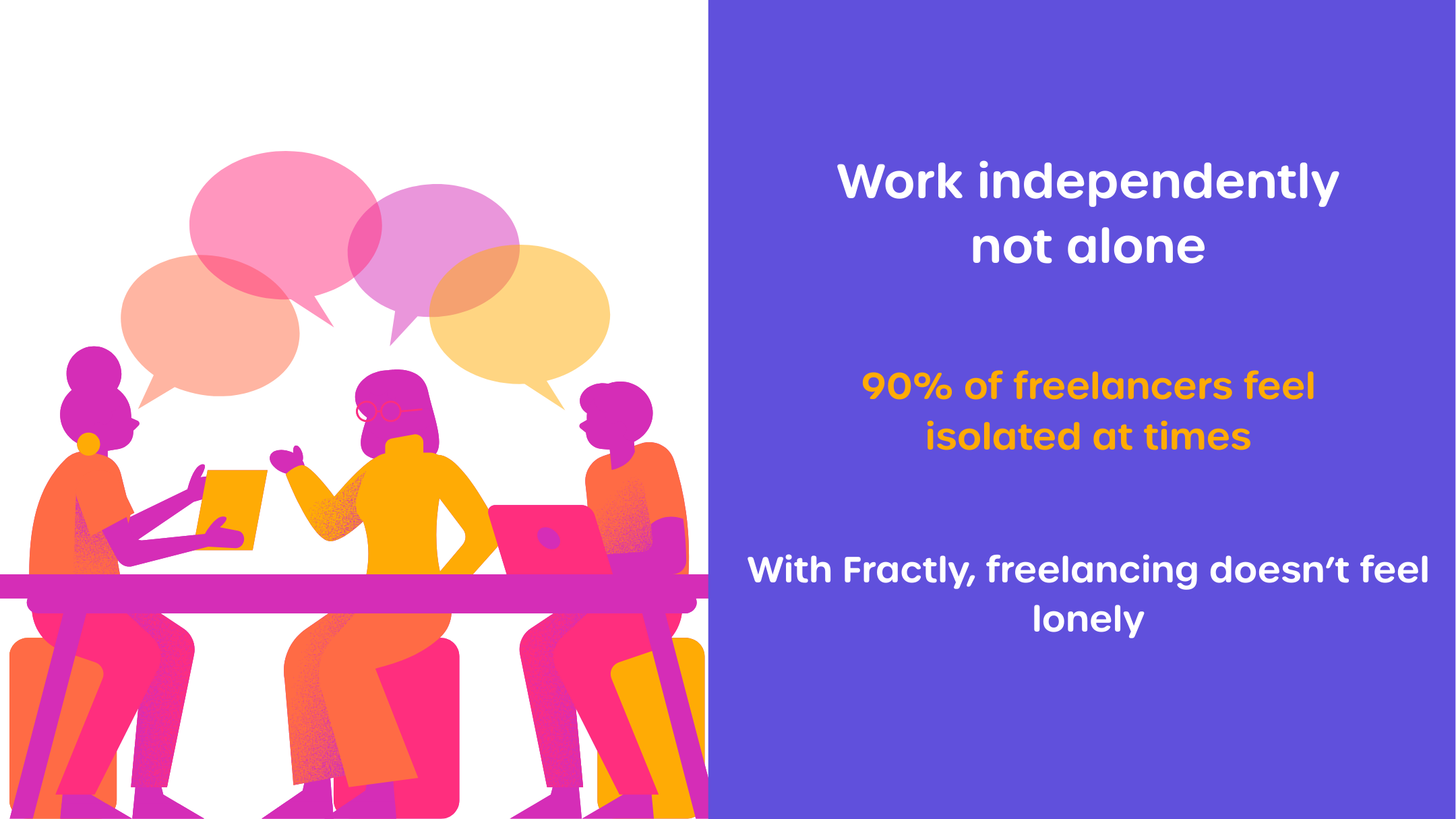
Recent research shows this isn’t a fringe issue. In 2024, around 90 % of UK freelancers reported feeling lonely, isolated and/or disconnected at some point, with only about 10 % saying they never felt this way. That figure is nearly three times the loneliness rate in the general workforce. In another study, over 70 % of self-employed professionals said they experienced feelings of isolation sometimes or frequently, showing how persistent and pervasive these experiences can be.
Why does this matter? Beyond wellbeing, it’s a business issue. Isolation can be a huge drag on mental health. Going by the stats presented above, freelancers’ mental health is declining, with most saying that they don’t know where to turn for support, nor feel supported by Government guidance or workplace structures. Without the workplace safety nets that come with employment – such as peer support, HR policies, structured feedback or even basic social connection, many freelancers unknowingly carry heavy emotional loads alone.
This is precisely one of the gaps that Fractly was created to change and help close.
At Fractly, we don’t just value great work, we prioritise great collaboration and really promote a work/life balance that we like to call ‘The Living Way’. Freelancers in our network aren’t floating alone; they’re part of something intentional. Our community model is built around connection, not isolation:
- Drop-in sessions where people can talk through ideas, challenges, and opportunities in real time.
- Direct lines of contact to both founders, Kathryn and Kirsty, so no question is ever too small, and no member feels unheard.
- A culture that encourages peer-to-peer support, shared problem-solving, and creative collaboration, so freelancers aren’t just connected, they’re working alongside kindred minds.
This networked approach isn’t a luxury. Research shows that social connection, whether through communities, coworking, or mentorship, plays a measurable role in wellbeing. Individuals reporting isolation often also show higher stress and lower productivity, while supportive networks help sustain motivation and empower resilience.
In the UK cultural and professional landscape, where the self-employed can lack the built-in social structures of traditional employment, Fractly’s model helps bridge that gap. We’re not trying to recreate the 9-to-5 office; we’re building something better suited to the future of work, where autonomy and connection can coexist, where independence is supported, not isolated, and where freelancers can thrive, not just survive.
At Fractly, we truly believe that no freelancer should have to be alone to achieve their desired work-life balance or succeed.