
We’ve Fought For A Living Wage. Now It’s Time For A Living Way.
The Living Wage sets a baseline for what people need to survive. But survival should never be the goal.
For years, the conversation around work has focused almost exclusively on pay. What people earn, what they’re worth, and what’s fair. That conversation matters, but it’s incomplete.
Because fair pay means very little if the way we work leaves people exhausted, disconnected, or unwell. It’s time to move beyond the Living Wage, and start talking about something just as important: the Living Way.
The problem with “having it all”:
For a generation of women, success has always come with conditions.
We were told to lean in, work harder, and prove we could do everything at once. Career, ambition, health, family, identity. The message was clear: balance was possible, if you were resilient enough.
The reality has been a quiet, widespread burnout.
Mental Health UK reports that nine in ten women in the UK have experienced burnout, with one in four experiencing it constantly. The Institute of Leadership estimates that 28 percent of women identify as neurodivergent, yet only 14 percent feel supported at work. The Office for National Statistics suggests that one in three women lives with a long-term health condition.
We recognise those figures because we’ve lived them.
We’ve tried to build businesses while managing chronic illness and neurodiversity. From the outside, it can look like balance. From the inside, it often feels like survival.
Fractly was built from that experience, and from frustration with how rigid and unforgiving much of the industry still is. We wanted to create a way of working that was sustainable not just for clients, but for people.
The cost of surviving work:
Work has become harder for almost everyone.
The job market is volatile, budgets are under pressure, and even highly experienced professionals are struggling to secure stable, full-time roles. The CIPD’s Labour Market Outlook (2025) highlights that marketing and creative roles remain among the most affected by hiring freezes and restructuring.
At the same time, expectations have increased. Faster turnaround times. More platforms. Constant availability.
We’re working harder than ever, but fewer people are thriving.
Flexible working is still framed as a perk rather than a principle. Fair pay is discussed more often than fair treatment. And “wellbeing” is too often reduced to surface-level gestures rather than meaningful change.
The Living Way:
The Living Wage helps people survive.
The Living Way helps people live.
At its core, the Living Way is a simple idea: work should support life, not replace it.
It’s about designing businesses, teams, and careers that value health, autonomy, and purpose alongside performance. It’s about measuring success by how well people are doing, not how much they can endure.
At Fractly, this looks like:
- Building flexible, fractional teams that fit around real lives
- Partnering with freelancers and clients in ways that are fair, transparent, and sustainable
- Creating structure and community for people who want independence without isolation
This is the model we call the Living Way. We don’t see it as an alternative anymore. We see it as the future of work.
Why this matters now:
The world of work is changing, whether we choose to engage with it or not.
In 2024, the UK’s self-employed sector contributed £366 billion to the economy. More than seven million people now freelance in some capacity. Flexible work is no longer niche. It’s mainstream.
And this shift isn’t about convenience. It’s about survival, equity, and longevity.
When we ignore the human cost of how we work, we lose people. Women leave industries they love because they can’t sustain the pace. Freelancers burn out from isolation. Businesses lose creativity, perspective, and talent because their teams are stretched too thin.
A new definition of success:
If the Living Wage sets the financial standard for survival, the Living Way can set the ethical and emotional standard for sustainability.
What if businesses were judged not only by profit, but by how well they protect their people? What if flexibility, inclusion, and well-being were treated as measures of excellence, not optional extras?
That’s the movement we want to build.
It starts as a conversation, but it doesn’t have to end there. One day, it could become a benchmark. A certification. A way of recognising organisations that make work genuinely work.
The future we’re building:
At Fractly, we’ve learned that the healthiest teams aren’t the biggest. They’re the most balanced. They’re built on trust, empathy, and flexibility. On the understanding that people do their best work when their lives are supported, not squeezed around it.
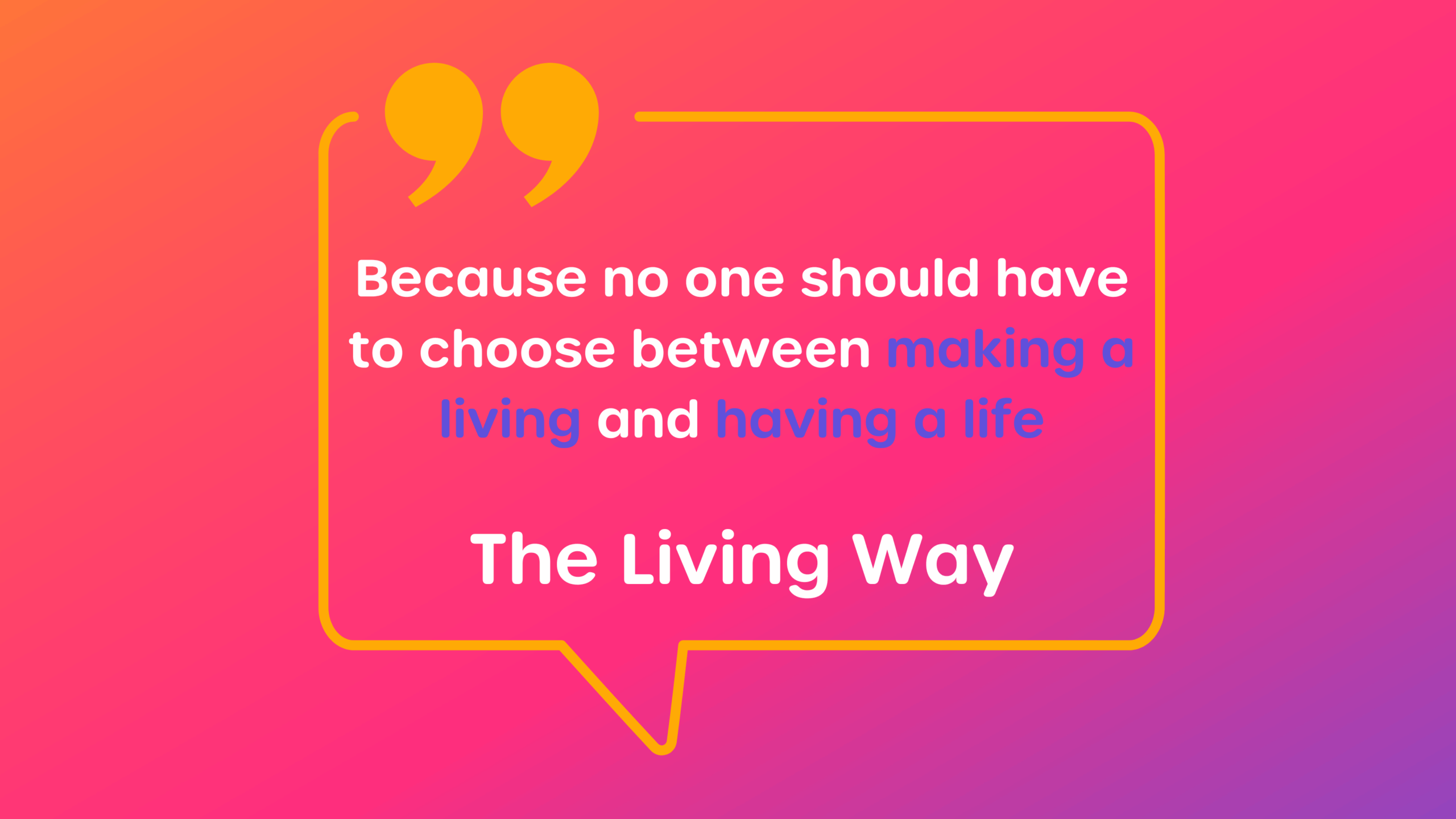
We’re not trying to redesign work for everyone. We’re simply proving that it can be done differently. Because no one should have to choose between making a living and having a life.
We’ve fought for a Living Wage.
Now it’s time for a Living Way.